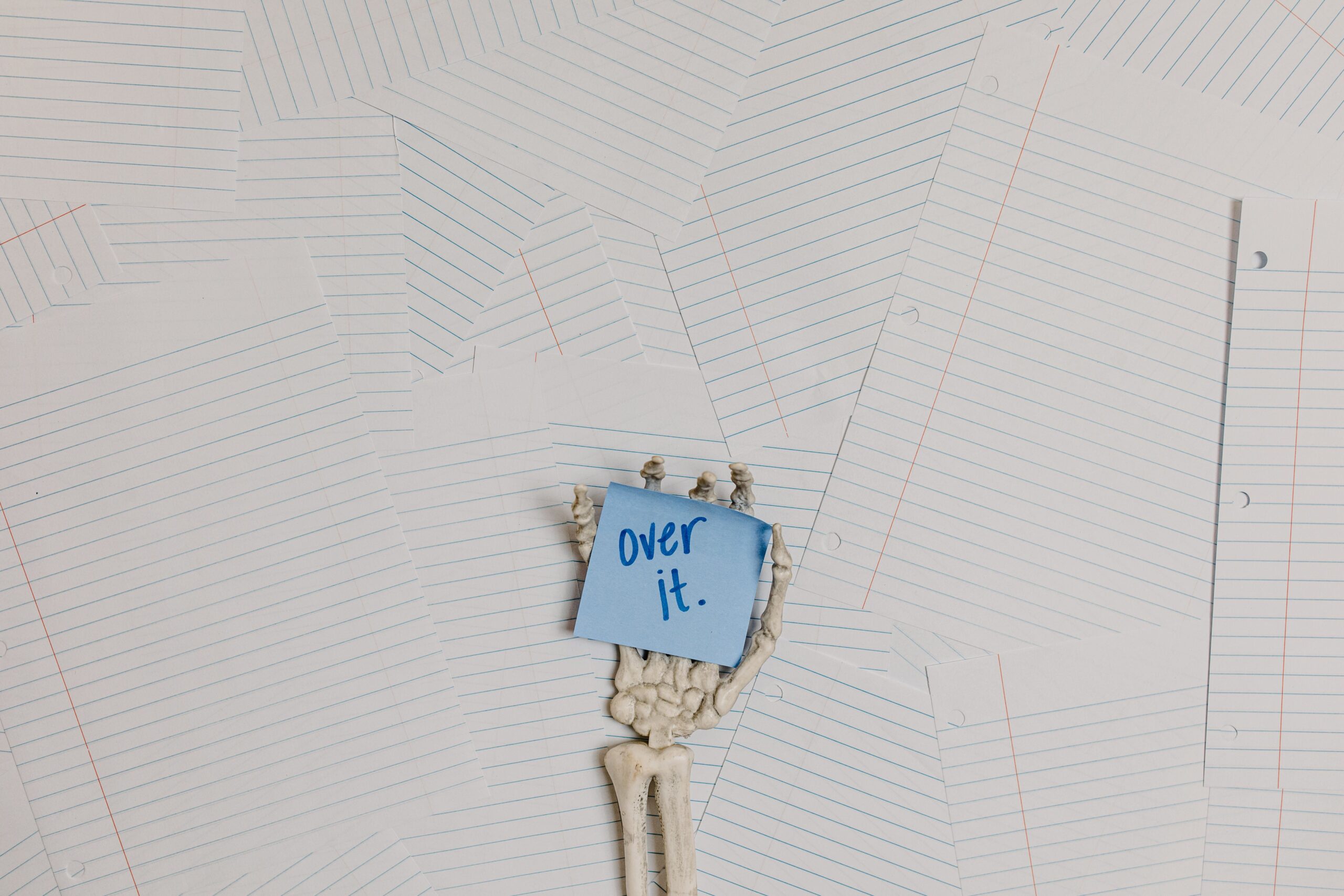
Here in Austin, it’s late September and the heat. Just. Won’t. Go. Away. By now, most of us have had enough. Our nerves are fried. We want to walk to our cars without sweating. We want to open the door in the morning and feel something—anything—that resembles fall.
And the heat isn’t the only thing that feels relentless.
There’s so much talk about how AI is changing the world—for good and for bad—and many people are wondering what those changes will mean for their jobs and livelihoods. Companies seem to be preparing their workforces for layoffs and downsizing. Austin is growing so quickly that simply driving across town can feel overwhelming, with construction seemingly everywhere. There are ongoing concerns about the safety of our environment and water. Many of us know people—or know people who know people—whose lives have been abruptly disrupted by immigration enforcement.
And everything is more expensive.
There is uncertainty everywhere: political, economic, technological, environmental. Some of these worries are close to home. Others are happening far away but arrive in our hands all day long through our phones.
And if you’re a highly sensitive person, or someone who experienced loss, instability, or trauma early in life, all of this uncertainty can be especially rattling.
Our radars can become highly tuned to look for dark clouds ahead. Our nervous systems are primed to react—to protect us from hurt.
That protective response makes sense. If you learned early in life that circumstances could change quickly, that people could disappear, or that safety wasn’t necessarily permanent, paying close attention may have helped you. You learned to notice the shift in someone’s voice, the mood in a room, the first indication that something might be wrong.
But a nervous system that is very good at detecting danger doesn’t necessarily know when it is okay to stop looking for it.
And right now, there is always something to find.
So I find myself returning to what may seem like an impossible question: How do we stay present enough to the world to care about what is happening, while also caring for ourselves enough that we aren’t consumed by it?
I don’t think the answer is to stop paying attention.
Nor do I think the answer is to convince ourselves that everything is fine when it isn’t.
Instead, perhaps the work is learning that being present does not require us to be vigilant every minute of every day.
We can care deeply about the world and still make dinner.
We can worry about someone we love and still laugh at something ridiculous.
We can read the news and then put the phone down.
We can notice the heat, the traffic, the uncertainty, the fear—and then notice the person sitting across from us. The dog sleeping beside us. The music playing in the car. The taste of something good. The feeling of our feet on the ground.
These small moments aren’t denial. They are part of our lives, too.
And sometimes, particularly after loss or trauma, we need help learning how to inhabit them again.
Therapy can offer a place to do that. It can be a container for thoughts and feelings that may be difficult to hold alone—or difficult to find enough space for in the outside world. It can also be a place to begin noticing when your nervous system is responding to something happening right now, and when it is trying to protect you from something it fears might happen next.
Over time, we can learn that caring for ourselves doesn’t require turning away from the world.
Sometimes it simply means allowing ourselves to live in it.
To notice what is frightening and what is beautiful.
To grieve what we’ve lost and still experience what remains.
To prepare for tomorrow without abandoning today.
The world may continue to be uncertain. There may always be dark clouds somewhere on the horizon. To prepare for tomorrow without abandoning today.
The world may continue to be uncertain. There may always be dark clouds somewhere on the horizon.
But we don’t have to spend our whole lives watching the sky.